


ANIÁN Materials
Salvaging 101
How discarded clothing becomes new cloth, with no dyes and no virgin fibre
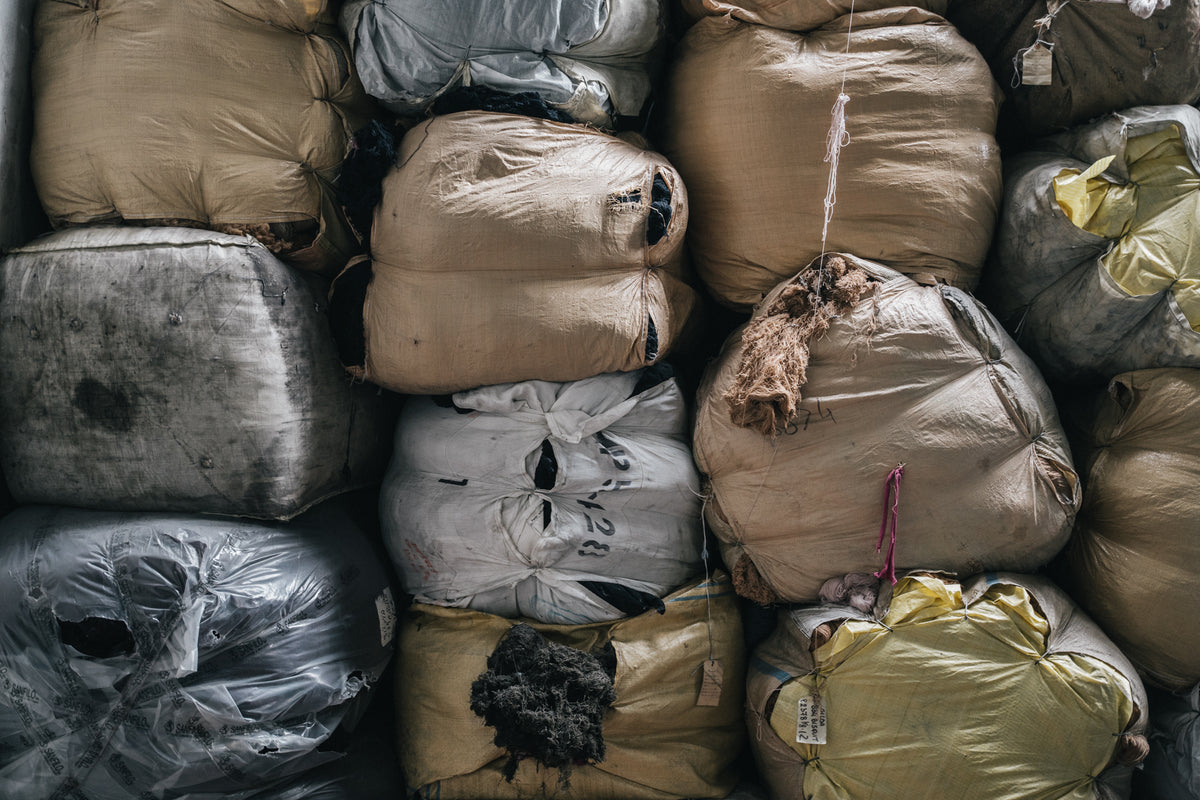
Fast fashion plays a huge role in today’s throw-away culture. Consumers are purchasing more and more trend-based garments and wearing them for as little as a month before donating them or throwing them away.
84%Of donated clothing ends up in landfills around the world
12MTons of textile waste landfilled in North America each year
Few people realize where those donations end up. Now more than ever, we need to look towards reusing what we already have.
Giving Garments a New Life
Anián has always been a natural fibre–focused brand. This year we are taking things a step further and transitioning into using entirely salvaged natural fibre textiles. What do we mean by salvaged? We mean that we are using fabric created from discarded clothing picked from landfills. We feel that it’s important to emphasize this fact. Salvaged textile waste can have a new life as a garment—and we’re doing it.

Now let’s talk about how these salvaged textiles are being recycled into new garments. Broken down into steps, it goes something like this:
- Step 01SortingThe salvaged textiles are sorted by hand into colours. This is where the fabric gets its colour—there are no dyes used. This eliminates the use of harmful chemicals and the resulting wastewater.
- Step 02ShreddingThe salvaged textiles are shredded into small pieces.
- Step 03WashingThe shredded textiles are then washed thoroughly.
- Step 04CardingAn ancient mechanical process which disentangles, cleans and intermixes fibres to help create a long continuous web-like structure.
- Step 05SpinningThe carded fibres are drawn out, twisted into yarn and wound onto a bobbin.
- Step 06WeavingThe yarn is woven on large looms into long bolts of fabric.
- Step 07FinishingThe bolts of fabric are then meticulously looked over before being cleared for manufacturing.

Recycled Wool vs. Virgin Wool
Why is recycled wool better than virgin wool? The production of virgin wool requires an intensive amount of land and water for sheep to graze. The animals produce fleece to be made into wool; however, they also produce methane, a powerful greenhouse gas. Many sheep make lots of gas. In addition, after shearing their fleece, it then requires a lot of energy, water, and chemicals to transform the wool into dyed, usable fabric. Recycling salvaged wool requires virtually none of this, creating a far less impactful textile.

Recycling wool isn’t a modern idea. Wool has been recycled for centuries, starting in about 1815 when its high demand had us turning to old scraps. It was quite common to see “rag men” in cities around the world. They would travel around with their carts collecting old fabrics and clothing to sell to manufacturers, who then broke the fabric down and gave it new life. This practice increased dramatically around WWII in North America and Europe when rationing became the norm.
A fibre made to last
Wool can be recycled 10 to 12 times before it loses its hardiness.
Saying “No” to the New
Anián has spent the last six years building a relationship with our textile recycling company in Italy because we believe in the positive impact of using salvaged textiles. The truth is that most fabrics are entirely recyclable, and wool is among the best for the job. Not only is salvaged wool much better for the environment—as we’ve mentioned—it’s also durable, naturally breathable, naturally stain resistant, easy to care for and softer than virgin wool. With perks like this, it makes saying “no” to new pretty easy.
Shop recycled wool